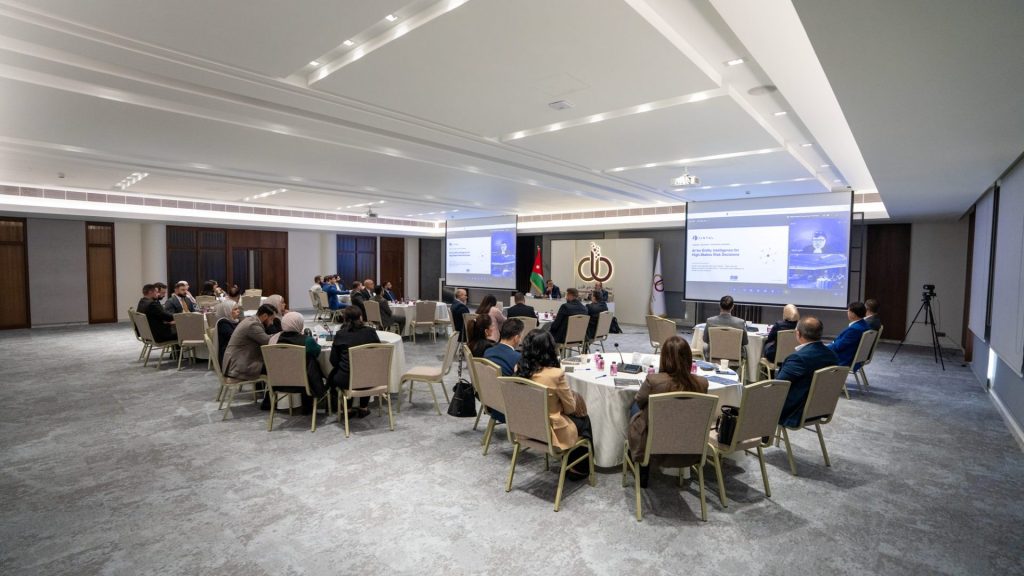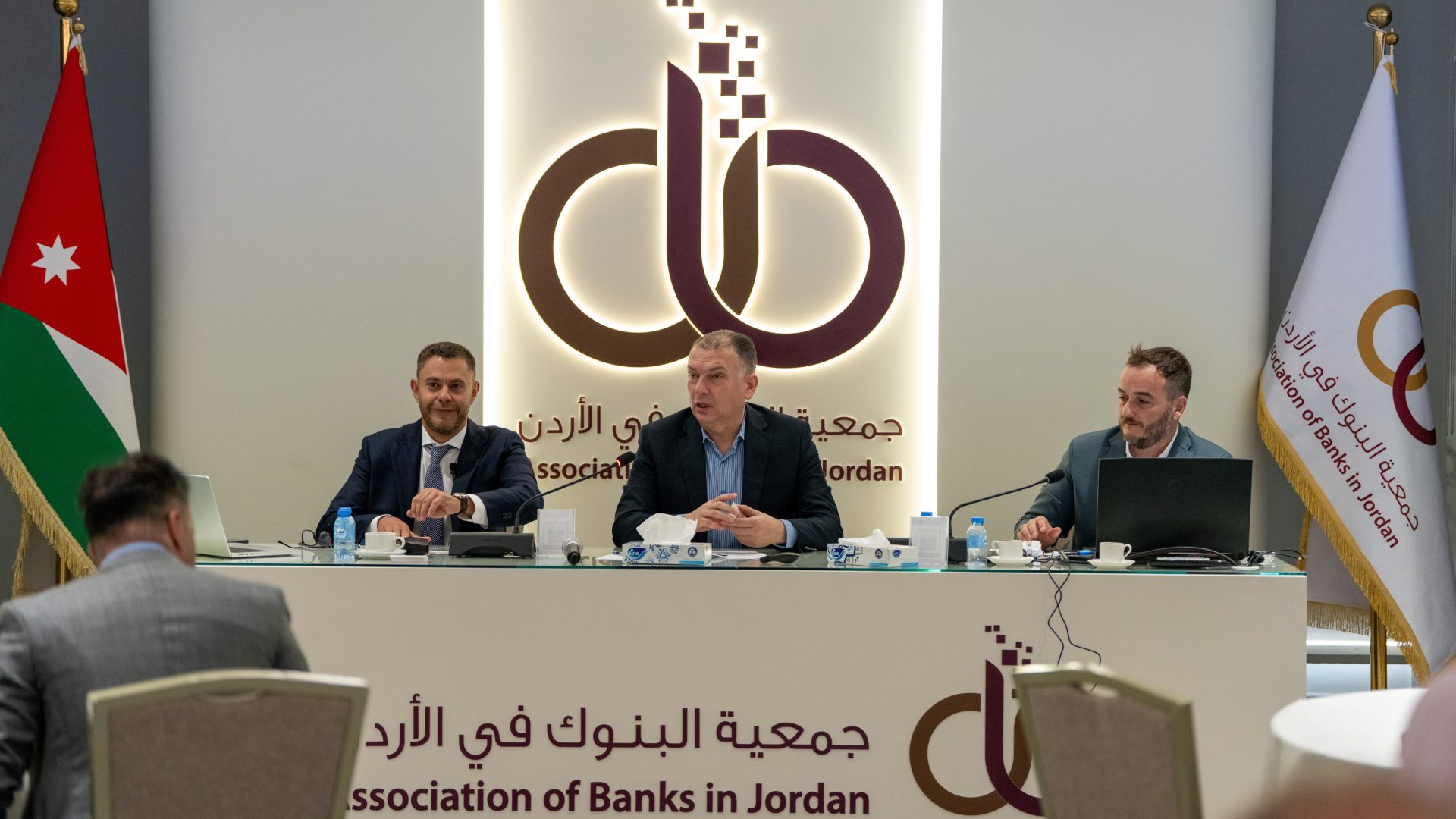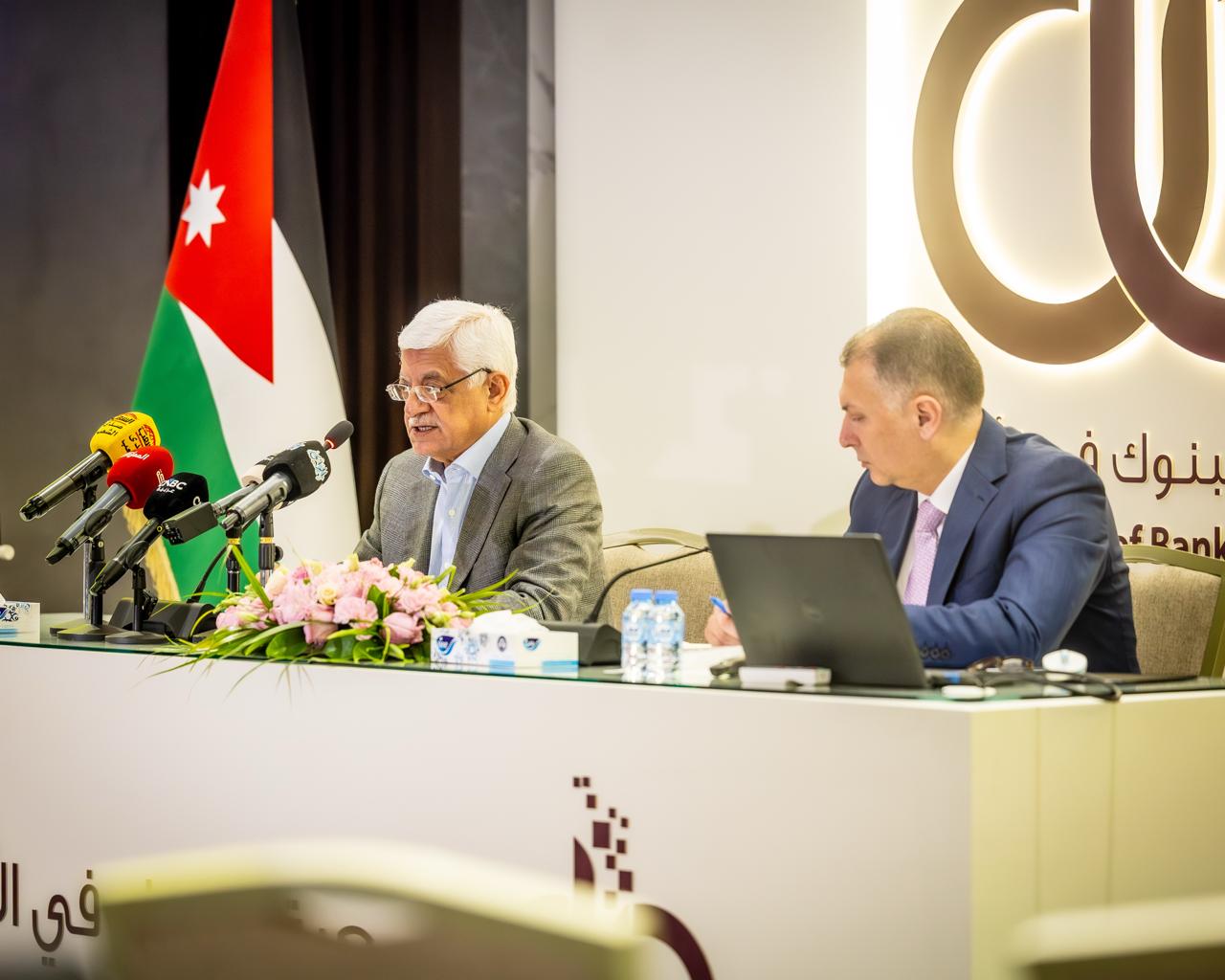

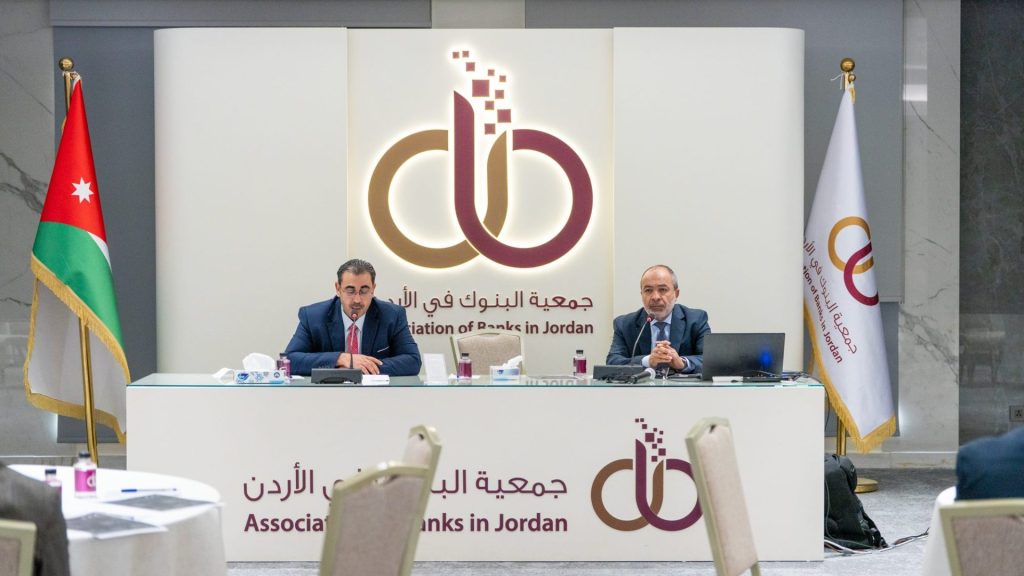
Amman, 21 October 2026 – The Association of Banks in Jordan (ABJ), in cooperation with aiNTEL, a company specializing in artificial intelligence and risk intelligence solutions, held an introductory session at the Association’s premises to showcase the InGrav platform and its role in leveraging artificial intelligence and advanced data analytics to enhance compliance and risk management, while supporting efforts to combat money laundering and financial crime across the banking sector.
The session brought together representatives of ABJ member banks specializing in compliance, anti-money laundering (AML), and risk management.
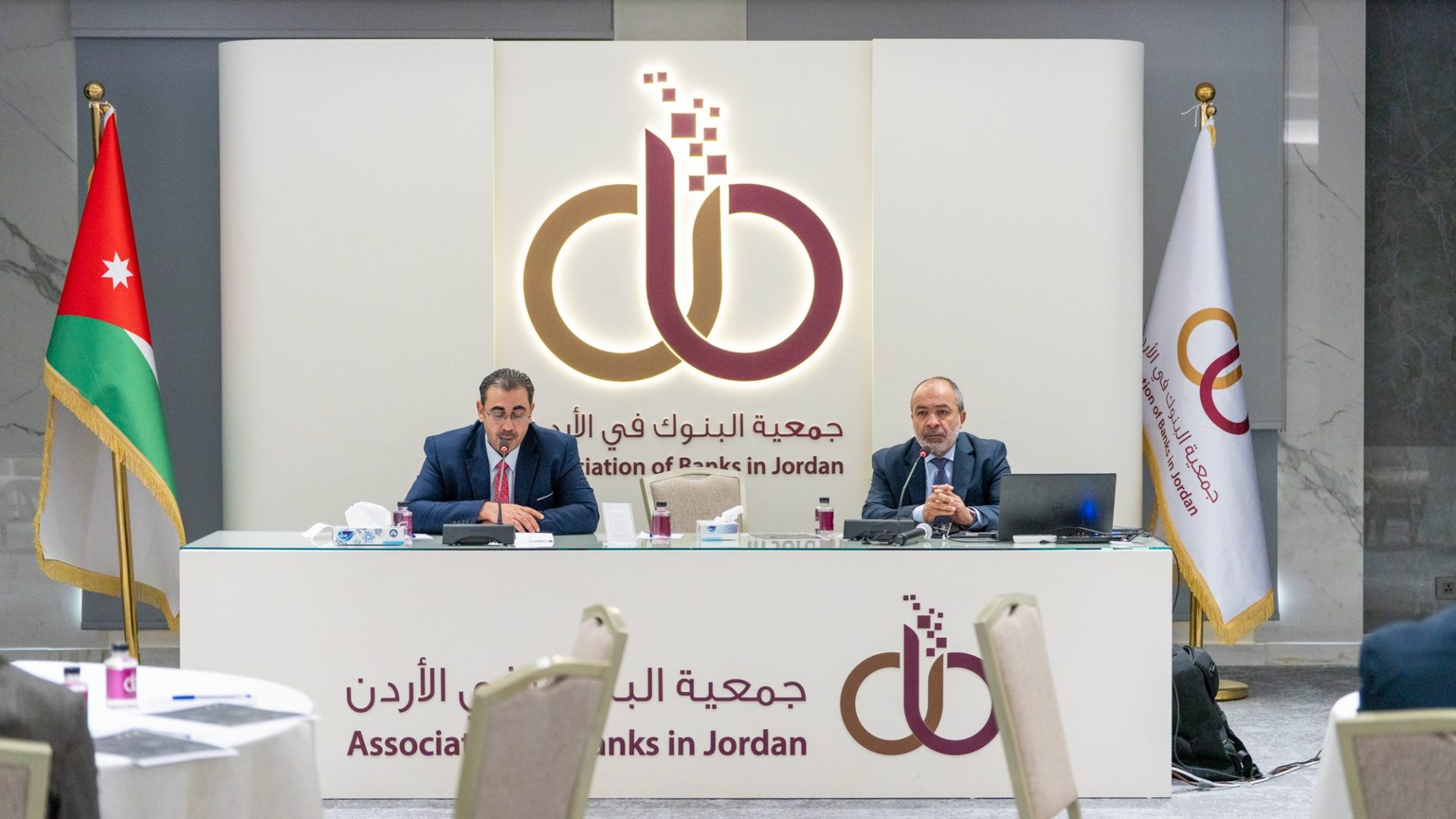
Opening the session, Mr. Fadi Mashharawi, Director of the Studies, Policies and Planning Department at the Association, welcomed the company’s representatives and participants. He emphasized the growing importance of leveraging advanced technologies as financial transactions become increasingly complex and operational risks continue to evolve. He noted that such technologies can enhance the efficiency of customer screening and due diligence procedures, strengthen risk detection capabilities, and help banks keep pace with regulatory and supervisory requirements, while maintaining data confidentiality and protection.
During the session, aiNTEL representatives Mr. Basem Abu Ayyash, Chief Executive Officer, and Mr. Khalil Khalil, Regional Director, presented the company’s experience in the region, along with the technical capabilities of the InGrav platform. The platform is built on a specialized AI architecture that combines integrated data sources, a Knowledge Graph engine, and AI models to support customer verification processes, analyze relationships between individuals and entities, and identify risk indicators more comprehensively.
The presentation covered the platform’s capabilities for name screening and matching against international sanctions lists, including those issued by the U.S. Office of Foreign Assets Control (OFAC), the United Nations, and the European Union, in addition to screening for politically exposed persons (PEPs), identifying adverse media, and supporting enhanced due diligence procedures. The company also presented the platform’s capabilities for individual and batch data screening, continuous monitoring of relevant changes, alert generation, and documentation of screening processes to support audit and compliance requirements.
Discussions also addressed the challenges associated from the multiple ways Arabic names can be rendered in Latin script, which may result in false positives, increase review workloads, and delay transaction processing. In this context, the aiNTEL team demonstrated how AI algorithms can improve matching accuracy and reduce inaccurate results, alongside the use of optical character recognition (OCR) technologies to extract information from documents, records, and official newspapers relevant to risk and financial crime.
The session also explored the role of the Knowledge Graph engine in analyzing relationships between individuals and entities, uncovering indirect links, and identifying ownership and control structures, including beneficial ownership. The discussion highlighted the importance of continuous monitoring of changes that may affect risk assessments, and explored the potential integration of the platform with banks’ transaction monitoring and anti-fraud systems through application programming interfaces (APIs), as well as the use of real-time data updates to enable faster response and improve operational efficiency.
The session concluded with an interactive Q&A session, where company representatives addressed participants’ inquiries concerning the platform’s technical features and practical applications. The discussion underscored the importance of continuing to explore technology-driven solutions that respond to banks’ evolving needs and enhance their compliance and risk management frameworks, Furthermore, included a proposal to organize dedicated demonstrations for interested banks, offering them a practical opportunity to explore the platform’s capabilities and assess its potential integration with existing banking systems.
The session was organized as part of the Association of Banks in Jordan’s ongoing efforts to foster knowledge and expertise sharing between banks and specialized technology solution providers, while offering participants the opportunity to explore the latest applications of artificial intelligence. The initiative supports the continued advancement of banking practices and contributes to strengthening risk management and compliance capabilities across Jordan’s banking sector.