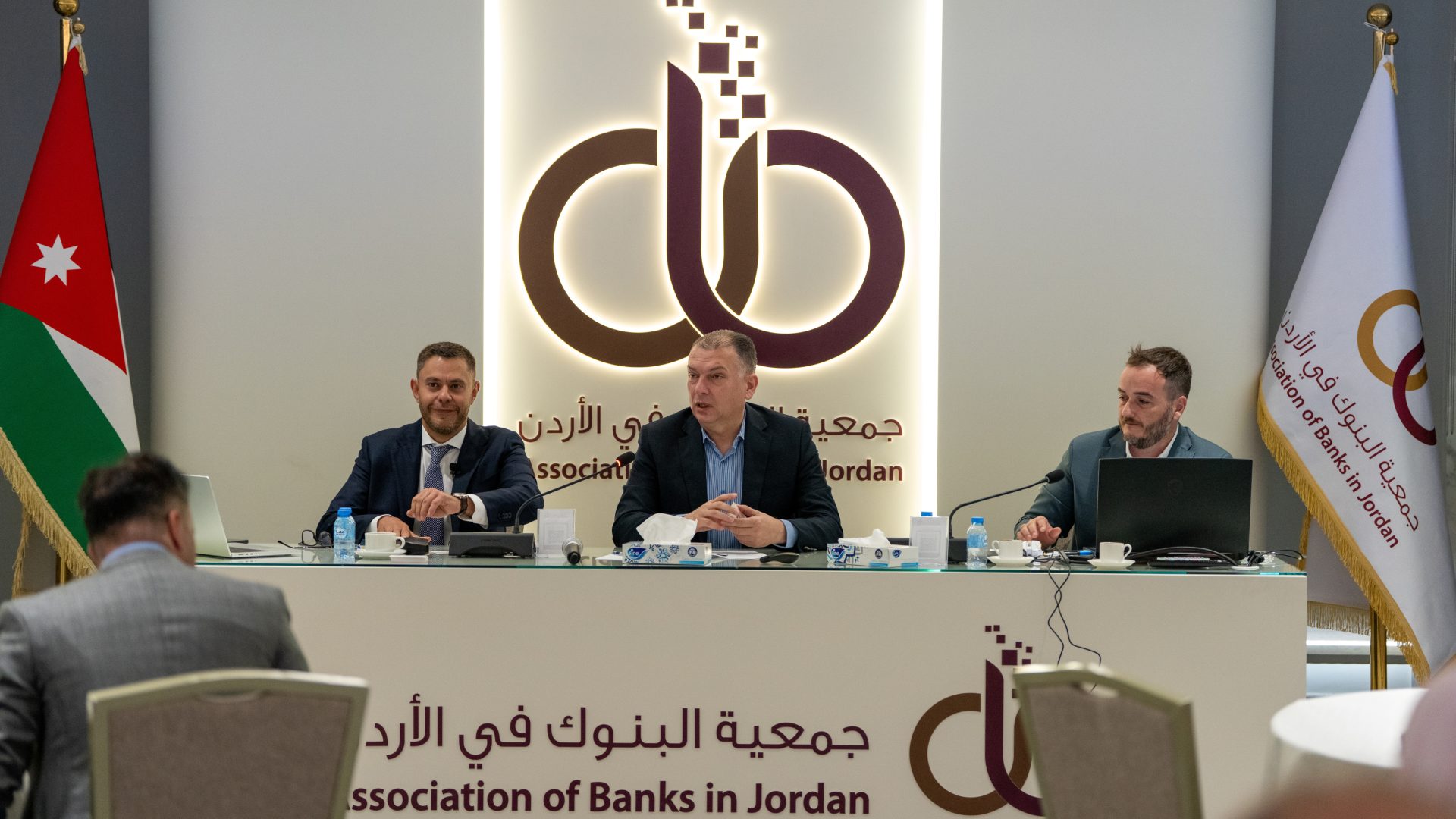



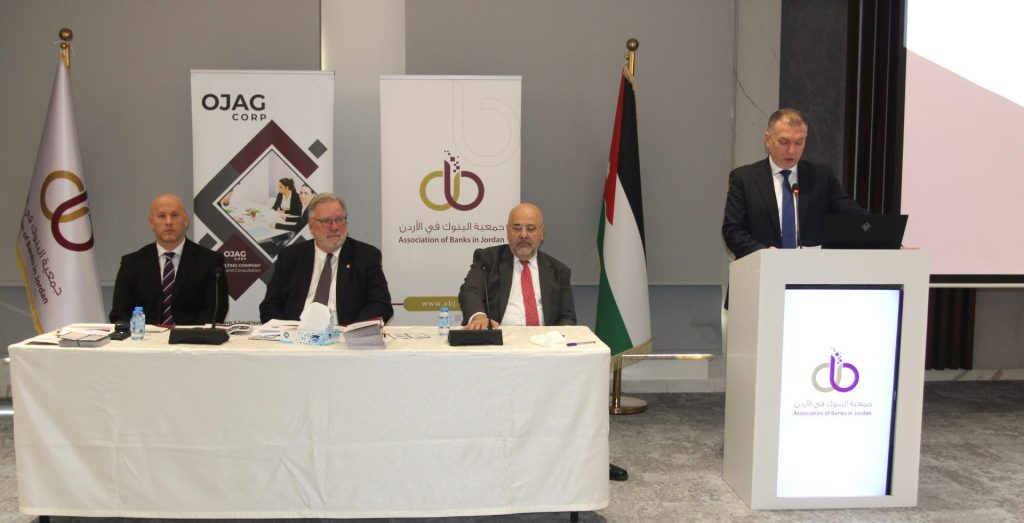
The Association of Banks in Jordan held, on Sunday, 2 October 2025, the Executive Compliance Officers Forum (CCOs Forum) under the title: “Strategic Leadership in Compliance, Financial Integrity, and Data Protection: A Roadmap for Leaders of the Banking Sector,” in cooperation with OJAG Consulting.
The forum was opened by Dr. Maher Al-Mahrouq, Director General of the Association, who emphasized that this meeting comes within the series of banking dialogues for the executive level (C-Suite Banking Dialogue Series) that the Association organizes periodically, with the aim of enhancing communication between the Association and senior executives (C-Level) in the banking sector, and exchanging expertise on strategic issues of importance to the sector.
Al-Mahrouq explained that the forum focuses on specialized issues in compliance with combating financial crimes and data protection in the digital age, in addition to the role of banking leadership in reinforcing institutional integrity. He pointed out that the nature of the meeting is based on dialogue and the exchange of ideas, not traditional training, which allows for effective participation and direct interaction among attendees.
The forum began with a presentation delivered by Mr. Peter entitled “Compliance Enforcement Trends in Combating Financial Crimes,” in which he reviewed the most prominent global trends in enforcing laws and financial supervision, and the latest priorities of the U.S. Department of the Treasury and the U.S. Department of Justice in the areas of anti-money laundering, combating the financing of terrorism, and international sanctions.
He also discussed real examples from global cases such as HSBC, Danske Bank, and Lafarge, explaining how governance failures and weak institutional oversight led to severe financial and legal consequences. He emphasized the importance of adopting the Risk-Based Approach, and enhancing communication between financial institutions, supervisory authorities, and law enforcement agencies, stressing that banking leadership bears direct responsibility in consolidating a culture of compliance and accountability by directing resources toward priority risks and strengthening institutional transparency.
For his part, Mr. Michael Olmsted, former U.S. federal prosecutor in the Anti-Money Laundering Section at the U.S. Department of Justice, presented privacy concerns in the banking sector, in which he addressed the increasing challenges related to the protection of personal data in financial institutions and the balance between privacy requirements and regulatory disclosure obligations. He also reviewed international legal frameworks such as the General Data Protection Regulation (GDPR) and the Jordanian Personal Data Protection Law, in addition to the complex aspects of cross-border data transfers and dealing with regulatory bodies in cases of financial investigation.
Olmsted called for adopting “Privacy by Design” practices within banks’ technical systems, appointing specialized Data Protection Officers (DPOs), and reviewing disclosure policies to ensure compliance with international standards.
At the conclusion of its proceedings, the forum emphasized that data protection and financial integrity represent two fundamental pillars for sustaining trust in the banking sector, noting that the coming stage requires banking leadership to achieve alignment between digital innovation and regulatory compliance requirements, and to enhance partnership with supervisory authorities locally and internationally.
The forum concluded with an open discussion session that focused on the role of senior leadership in shaping a culture of compliance, and on ways to achieve balance between technological development and the requirements of integrity and transparency, in a manner that strengthens the resilience and sustainability of banking institutions in facing future challenges.