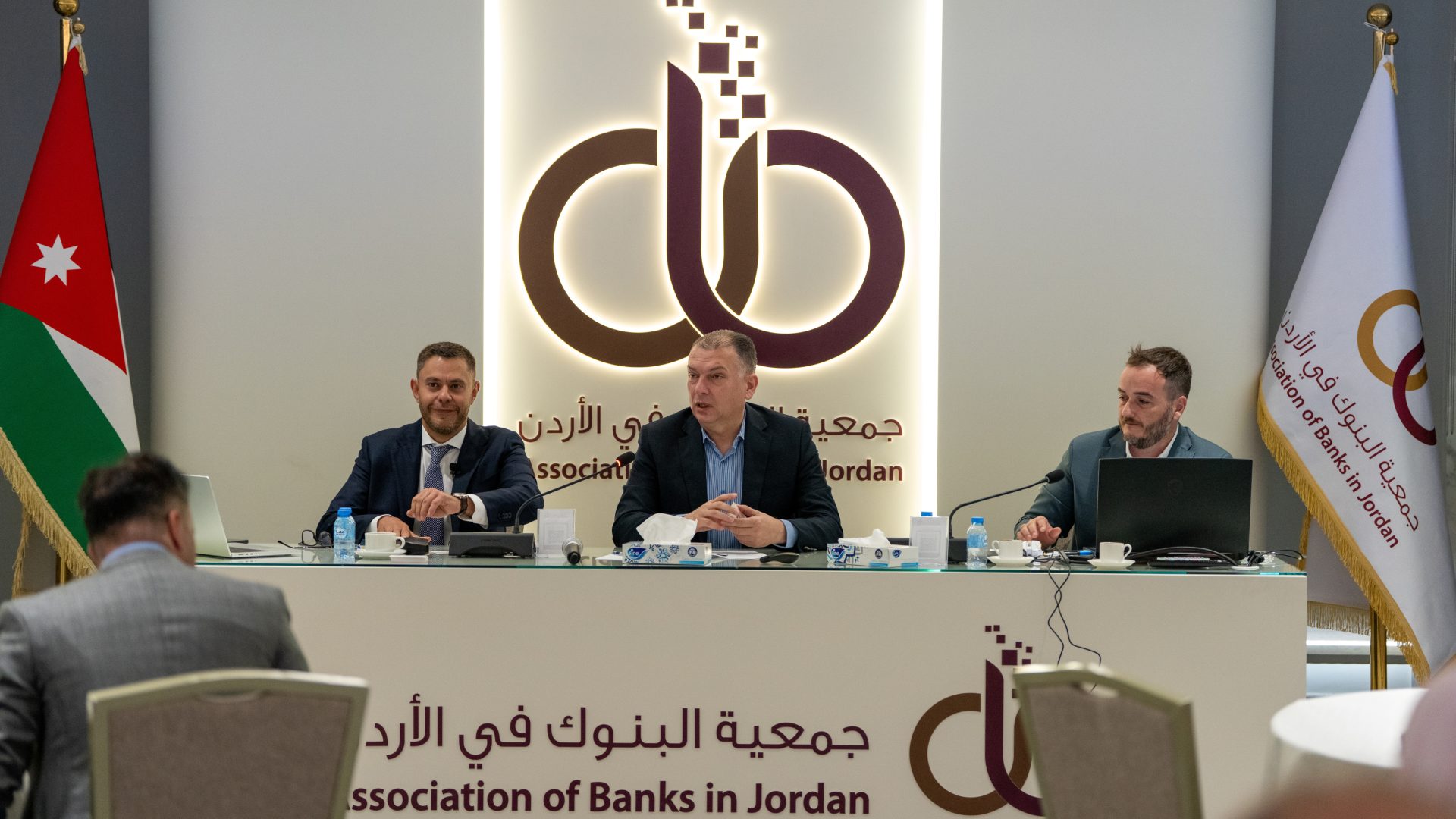



Sharkas: Green and sustainable finance has become a national priority.
Sharkas: The economic and financial role is no longer confined to profitability, but extends to social and environmental responsibility.
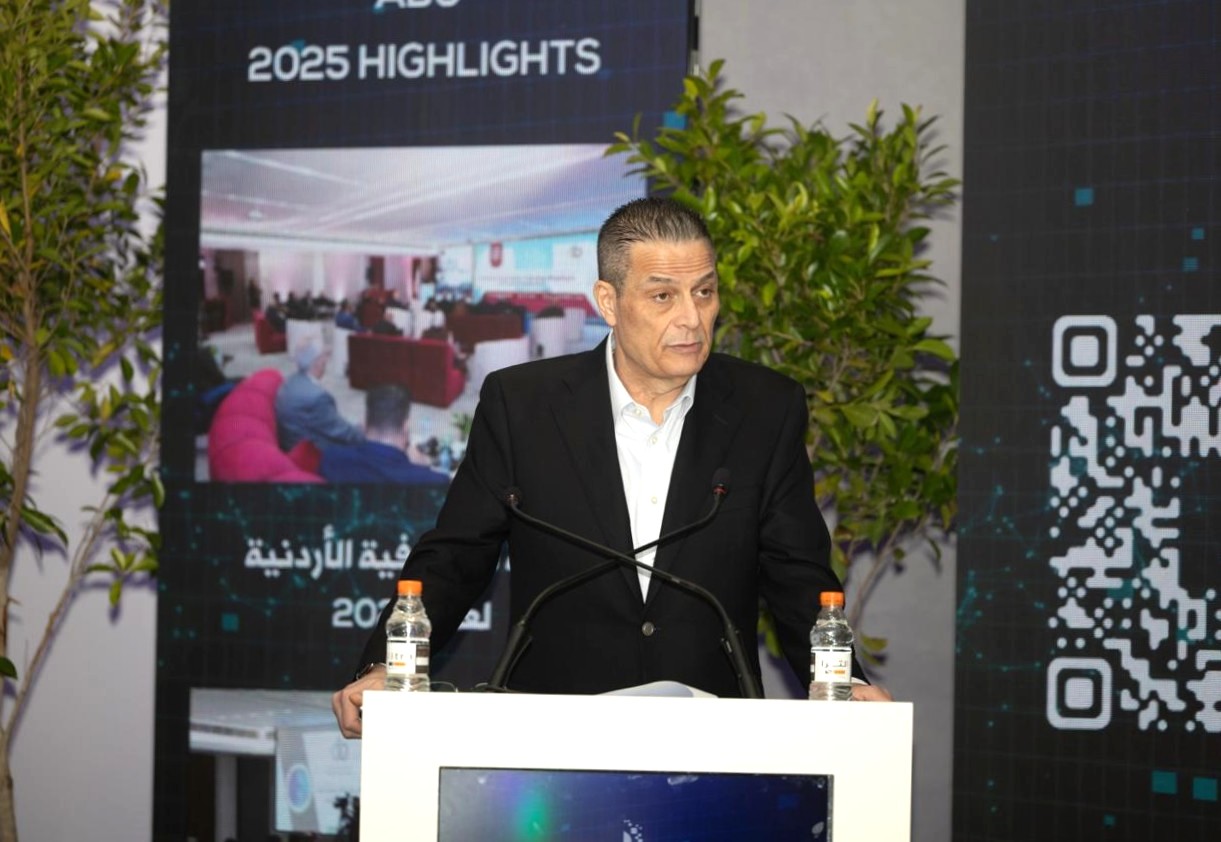
Sharkas: Since 2013, the Central Bank has been a pioneer in adopting environmentally supportive policies by including the renewable energy sector in concessional financing programs
Sharkas: The issuance of climate risk management guidelines came to enhance banks’ ability to measure and monitor risks
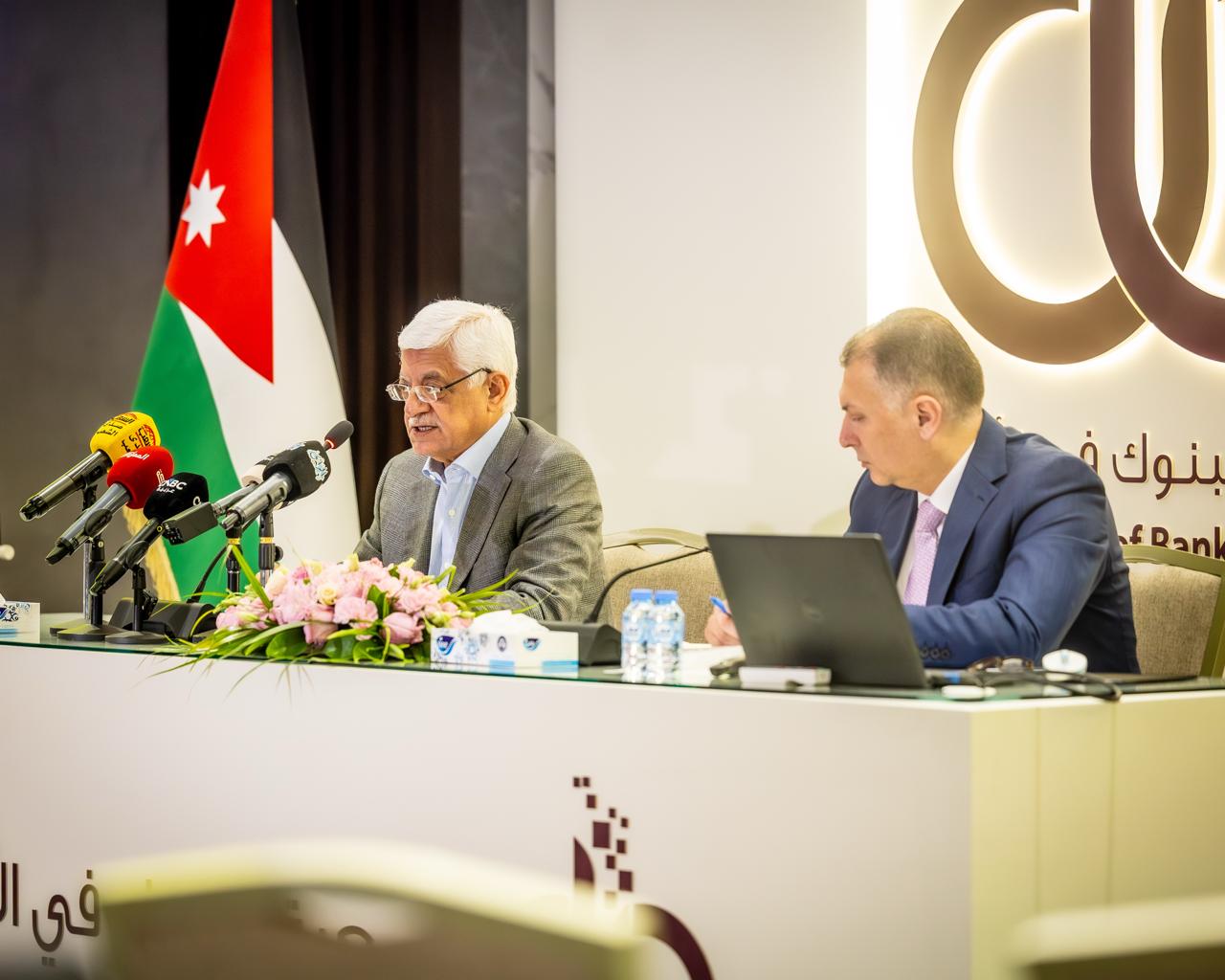
Al-Safadi: Since 2023, the Green Finance Forum has become an annual national platform for dialogue in support of the sustainability agenda
Al-Safadi: The move towards sustainability and green finance is no longer secondary, but has become a fundamental pillar to strengthen the contribution of the banking sector to comprehensive development
Teixes: The European experience in sustainable finance may not be perfect, but it provides important lessons on how to turn ambitions into rules, markets, and real capital flows
Al-Mahrouq: The Association of Banks in Jordan has, in recent years, consolidated its presence in the field of green finance
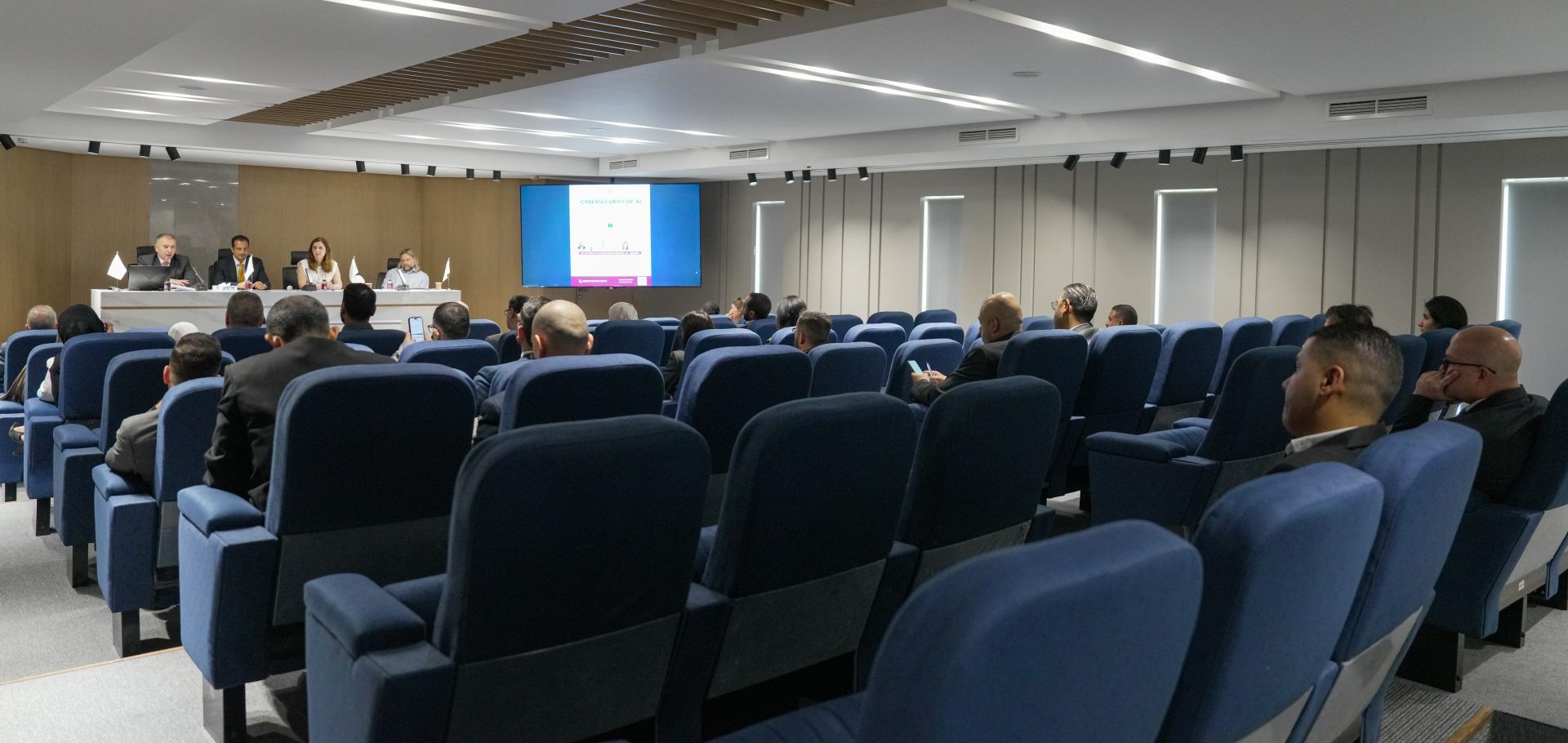
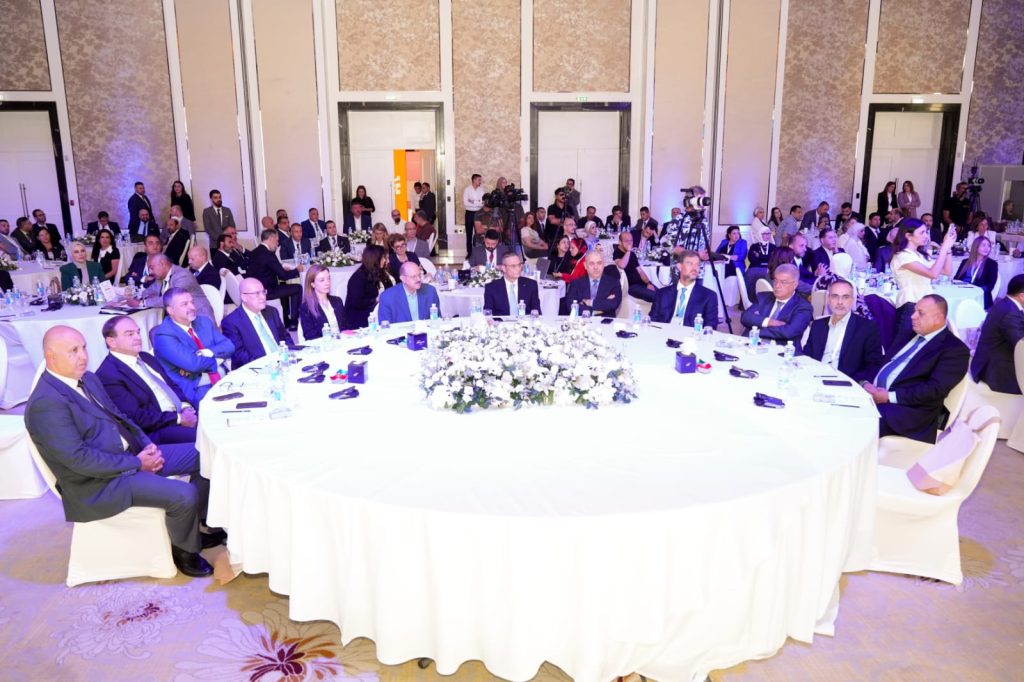
The Association of Banks in Jordan held today, Tuesday, the Green and Sustainable Finance Forum 2025, in its third edition, under the theme “Green and Sustainable Finance: From Vision to Design,” under the patronage of the Governor of the Central Bank, H.E. Dr. Adel Sharkas, and with the participation of a select group of bank leaders, policymakers, and local and international experts.
The forum aims to discuss ways of designing and implementing green financial products in line with international sustainability standards and market needs, in addition to showcasing innovative financing mechanisms to address the challenges of climate change and to steer the economy towards a more resilient and sustainable path.
The forum constitutes a key milestone in the path of strengthening banking sustainability in the Kingdom, by highlighting the role of the Jordanian banking sector as one of the main players in accelerating the transition to green banking models, and contributing to linking green finance with real economic opportunities that serve the Sustainable Development Goals.
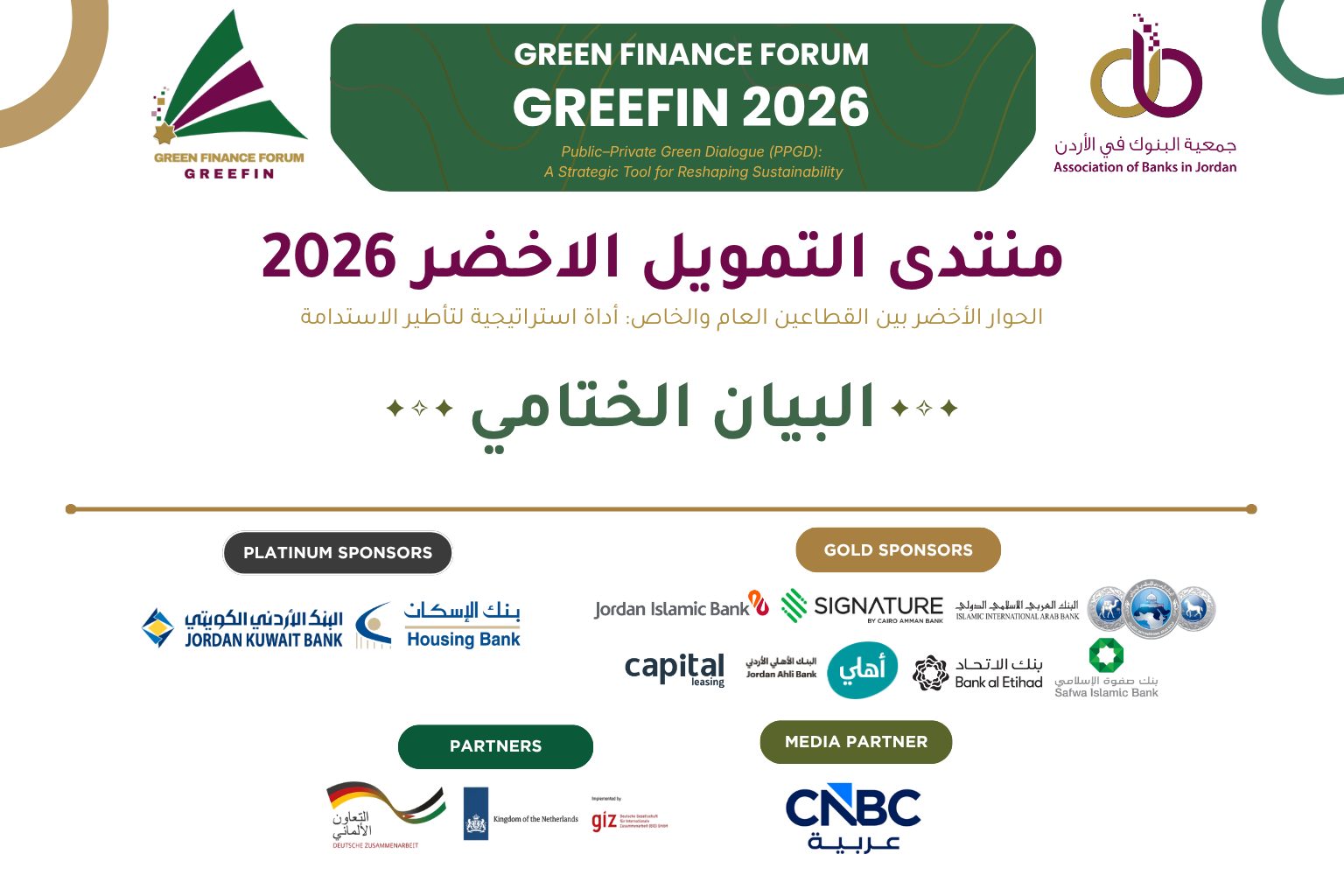
The forum was held with platinum sponsorship from Housing Bank and Jordan Kuwait Bank, in addition to gold sponsorship from Jordan Ahli Bank, Bank al Etihad, Capital Bank, and Jordan Islamic Bank, alongside wide participation from chief executives and board members of banks.
The Governor of the Central Bank, Dr. Adel Sharkas, said that green and sustainable finance has become a national priority, affirming that holding the annual forum under the theme “Green and Sustainable Finance: From Vision to Design” represents a key milestone in supporting the objectives of the Economic Modernization Vision, foremost of which is the transition to a sustainable green economy in the Hashemite Kingdom of Jordan.
Sharkas added in his speech at the opening of the forum that the world is living amid accelerating climate, environmental, and social challenges, and it is no longer possible to work in isolation from sustainability concepts. He stressed that climate change is one of the most serious global issues with its economic, social, and environmental consequences, which requires continuous international efforts to mitigate its effects and adapt to its potential outcomes.
He explained that the economic and financial role is no longer confined to profitability, but extends to social and environmental responsibility, which has placed Environmental, Social and Governance (ESG) considerations at the forefront of the global financial agenda.
He pointed out that the Central Bank has been a pioneer since 2013 in adopting environmentally supportive policies by including the renewable energy sector in concessional financing programs, before later expanding to cover all green projects.
Sharkas indicated that in 2023 the Central Bank launched the National Green Finance Strategy 2023–2028, in cooperation with the World Bank and in partnership with the Association of Banks and the financial sector, covering banks, financing companies, and insurance. He added that the Central Bank joined in 2021 the Network for Greening the Financial System, contributing to international efforts to strengthen the financial system’s response to climate change risks and to direct investments towards low-carbon projects.
He pointed out that the Central Bank worked on building national capacities in the field of green finance through specialized training programs and a comprehensive assessment of climate risks on the financial sector in cooperation with the World Bank, noting that the issuance of climate risk management guidelines in February 2025 came to enhance banks’ ability to measure and monitor such risks. He added that work is ongoing with the Ministry of Environment and the World Bank to develop the national green taxonomy, which will provide a clear definition of green projects and open broader financing opportunities.
He affirmed that the Jordanian financial and banking sector is capable of playing a pivotal role in climate adaptation through lending, investment, and risk management policies, stressing that financial institutions are required to protect their stability from climate risks while at the same time supporting the transition to a low-carbon economy through the provision of environmentally friendly products and services.
Sharkas reviewed leading international experiences such as Germany, which invested heavily in renewable energy through banks, the United Kingdom, which issued sovereign green bonds to support sustainable infrastructure projects, China, which became the world’s largest issuer of green bonds, and Morocco, which established the Noor solar plant as one of the most prominent successful Arab models. He said these models confirm that success in transitioning to a green economy requires genuine partnership between government policies and the financial sector, the latter being a key lever in mobilizing resources and directing them toward sustainable projects.
He added: “Jordan is capable of building on its achievements by encouraging banks to innovate green financial products for individuals and companies, and by enhancing regional and international cooperation to exchange expertise and build long-term partnerships.”
The Governor of the Central Bank concluded by saying that Jordan, through its financial and banking sector, is capable not only of keeping pace with global transformations in green finance but of becoming a pioneering model in the region in this field.
For his part, Vice Chairman of the Association of Banks in Jordan, Ammar Al-Safadi, said that since 2023 the Green and Sustainable Finance Forum has become an annual national platform for dialogue and partnership between the banking sector, government and private entities, and international partners, in support of the sustainability agenda in the Kingdom and in line with the Royal vision for economic modernization.
Al-Safadi added in his speech that the Association extends its gratitude and appreciation to the Governor of the Central Bank, Dr. Adel Sharkas, for his patronage of the forum for the third consecutive year, affirming that this reflects the Central Bank’s commitment to supporting the path of sustainability and green finance and its role in driving economic growth.
He explained that the move toward sustainability and green finance is no longer a secondary option, but a fundamental pillar in strengthening the banking sector’s contribution to comprehensive development, as it opens opportunities for productive sectors to obtain the financing they need for their green requirements, enabling them to expand and innovate.
He pointed out that this contributes to redefining the traditional role of banks from being merely financial intermediaries to becoming key partners in building a financial system that supports sustainable growth.
He noted that holding the forum this year coincides with government preparations to launch the second phase of the Economic Modernization Vision’s executive program for the years 2026–2029, after in-depth discussions at the Royal Court highlighted the banking sector’s achievements and contributions to sustainable development, affirming that green finance forms an essential pillar of upcoming executive plans given its integrated economic, environmental, and social impact.
Al-Safadi referred to the Central Bank’s initiative in launching the National Green Finance Strategy 2023–2028, which received Arab and international recognition as a pioneering regional experience, noting that it provides a clear roadmap toward sustainability.
He added that the strength of banking indicators provides a solid foundation for this year’s forum, pointing out that the capital adequacy ratio reached 18% at the end of 2024, exceeding regulatory requirements, while legal liquidity stood at about 145%, and non-performing loans did not exceed 5.6% of total loans, reflecting asset quality and efficient risk management.
He added that key indicators continued on an upward trajectory, with banking assets reaching 71 billion dinars by the end of June 2025, deposits amounting to 48 billion dinars, and credit facilities reaching about 35 billion dinars by the end of July of the same year.
Safadi affirmed that these indicators reflect not only financial performance, but also confirm the banking sector’s solid financing base, enabling it to expand in green finance and develop innovative tools and products that support national priorities and accelerate the transition toward a green economy.
He said that the themes of this year’s forum focus on financial innovation, exploring promising growth opportunities, strengthening governance and compliance, and building strategic partnerships to facilitate a just transition that takes into account climate justice as well as social and economic dimensions.
In his remarks on the importance of the forum, CEO of Jordan Kuwait Bank, Haetham Al-Buttikhi, stressed the importance of green finance as a leading regional and international platform to promote dialogue and exchange expertise on sustainable finance. He explained that the bank’s sponsorship and participation in this forum reflects its deep commitment to social and environmental responsibility and its ongoing efforts to adopt banking practices that support the national orientation toward a green economy, in line with the Sustainable Development Goals locally and internationally. Al-Buttikhi highlighted the importance of developing strategic partnerships that contribute to launching innovative financial products with positive impact on individuals and sectors in Jordan and the region, pointing out that green finance represents a strategic priority in the bank’s future plans.
For his part, Vice Chairman of the Association of Banks in Jordan and CEO of Housing Bank, Ammar Al-Safadi, said: “Housing Bank’s sponsorship of the forum is a concrete translation of our deep commitment to environmental and financial sustainability, and our firm belief in the banking sector’s role in driving economic and social growth towards a more sustainable future. We are working under a clear strategy aimed at achieving the transition to a green economy, through three main pillars: developing innovative green financial products that meet market needs, supporting the Central Bank’s policies in this field, and enhancing partnership with the public and private sectors and civil society, to achieve integration with various industrial and commercial stakeholders in developing practical solutions to climate change.”
He added: “We are continuously working to build local, regional, and international partnerships and to create practical frameworks across various sectors to ensure directing investments toward sustainable economic and social projects, at both the national and regional levels, in a way that enhances economic progress and prosperity and delivers direct benefits to communities.”
Meanwhile, Vice Chairman of the European Banking and Financial Training Network (EBTN), Ferran Teixes, said in his speech that the European experience in sustainable finance may not be perfect, but it provides important lessons on how to turn ambitions into rules, markets, and real capital flows. He pointed out that the global sustainability landscape is complex, with varying approaches across regions and countries, making the task more difficult, but also more urgent.
He explained that Europe’s role lies in demonstrating that sustainability and finance can go hand in hand, and that integrity and ambition can coexist with competitiveness. He affirmed that Europe has, in recent years, built the world’s most comprehensive framework for sustainable finance, requiring companies to disclose sustainability data with the same rigor as financial data, adopting detailed standards, and introducing the principle of “double materiality,” which obliges companies to explain how sustainability affects them and how they affect society and the environment.
Teixes explained that the European Union launched the “European Sustainability Taxonomy” as a common language, adopted proportionate reporting standards for SMEs, and financial institutions developed new approaches for measuring climate risks and opportunities within risk management and pricing.
He added that the European Investment Bank issued green bonds that saw overwhelming demand, many times oversubscribed, reflecting the credibility of this approach.
He stressed that sustainable finance is not just an environmental commitment, but also sound risk management, with evidence showing that green assets often deliver more stable, risk-adjusted returns, as they are less exposed to regulatory shocks, stranded assets, or reputational risks.
He noted that much of sustainable finance so far has focused on what is already green—such as renewable energy, green mobility, and energy efficiency—but Europe realized that sustainability is not limited to that, but must also finance the transition itself, including heavy and traditional industries that must reduce emissions and adopt new technologies, affirming that finance has a central role in accelerating this transformation.
For his part, Director General of the Association of Banks, Dr. Maher Al-Mahrouq, said that the Association has, in recent years, consolidated its presence in the field of green finance, through a gradual process that began in 2023 with a detailed evaluative study of the state and practices of green finance in Jordan, covering both supply and demand sides, and focusing particularly on the role of green finance in supporting the transformation of Jordan’s industrial sector into a more sustainable sector.
Al-Mahrouq explained that the results of that study revealed a knowledge gap in adopting green energy solutions and an urgent need to raise awareness and build capacity in green finance, banking services, and environmentally friendly financial products, as well as a need to develop comprehensive green financing products to meet the requirements of economic sectors, particularly industry.
He added that these efforts coincided with the Central Bank’s survey in the same year to establish the National Green Finance Strategy 2023–2028, which prompted the Association to establish the Green Finance Committee, comprising representatives from around ten banks operating in the Kingdom.
He indicated that these preparations enabled the Association to effectively participate under the umbrella of the Central Bank in formulating the National Green Finance Strategy, and in launching the first Green Finance Forum in the banking sector, entitled “Preparing the Scene,” which focused on identifying the sector’s needs in this field. The Association then expanded cooperation locally, regionally, and internationally, signing an agreement with the International Finance Corporation (IFC) to enhance training in environmental and social governance, and joining the Sustainable Banking and Finance Network (SBFN).
Al-Mahrouq also reviewed the Association’s efforts in training banking staff specialized in climate risk analysis and sustainability reporting, which has become a fundamental requirement for financial institutions. He explained that by early 2025, the Association had completed training more than 400 employees from Jordanian banks in various fields of green finance and sustainability.
He concluded by saying that this path represents a firm commitment by the Association of Banks in Jordan to supporting the transition toward a green economy, strengthening regional and international partnerships, and equipping the banking sector with the competencies and capabilities required to keep pace with global shifts in sustainable finance.
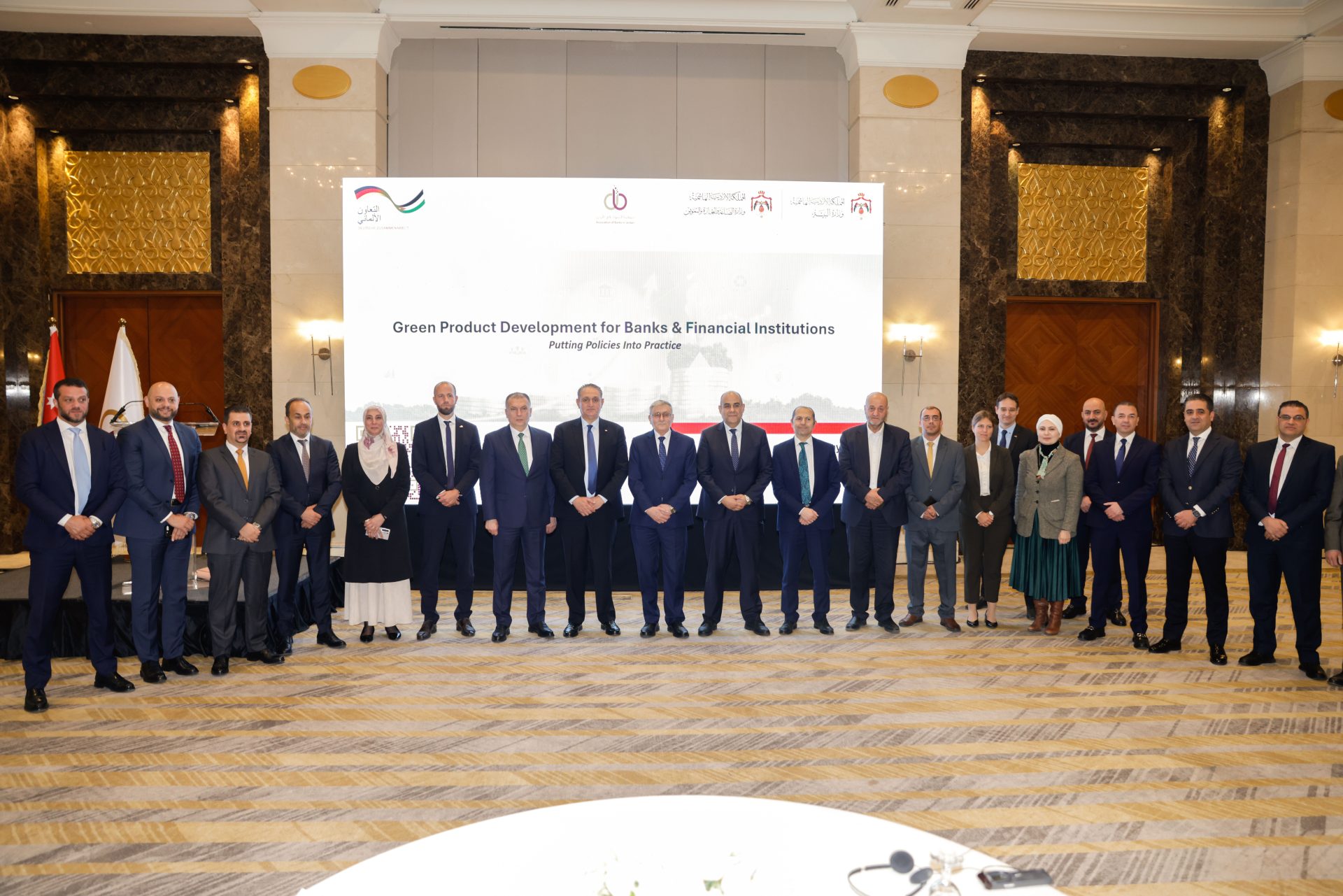
At the end of the opening session, the Governor of the Central Bank honored the forum’s sponsors and partners, while the Vice Chairman of the Association of Banks, Ammar Al-Safadi, honored the Central Bank Governor for his generous patronage of the forum.